
Guides
Polymarket Alternatives: Compare Markets, Fees and Ways to Start
Compare Polymarket alternatives by who each suits, sign-up, funding, fees and exit rules. Use clear trade-offs and a USDC example to build your shortlist.
Read guide
Compare platforms, fees and ways to get started. Find the guide that helps you choose your next step.
Compare Polymarket alternatives by who each suits, sign-up, funding, fees and exit rules. Use clear trade-offs and a USDC example to build your shortlist.
Read guide
Compare Kalshi alternatives by markets, funding, fees and exit rules. Separate U.S. and international products, another app and another exchange.
Read guide
Compare Polymarket and HypaForecast on fees, funding, custody, market rules and early exit—with equal-size examples and reasons to stay or switch.
Read the guide
Compare Kalshi and HypaForecast on funding, price-dependent fees, identity checks, custody and execution. Use conditional cost examples to assess each route.
Read the guide
Compare saved 2–3 October Nigeria prediction-market sources and conditional HypaForecast fee examples. Check current eligibility, identity and money routes first.
Read the guide
Read saved 2–4 October sources for Nigeria, South Africa, Kenya, Ghana and Egypt. Check current eligibility, identity and full money routes; global fee updates are separate.
Read the guide
Check current eligibility first. Dated Nigeria funding notes and conditional HypaForecast examples explain accounts, orders, fees, exits and withdrawal checks.
Read the guide
Learn how to trade prediction markets: read the rules, check prices and fees, place orders, manage fills, sell early or settle, and withdraw available funds.
Read the guide
Compare Kalshi, Polymarket, Robinhood, HypaForecast and Limitless by eligibility, funding, fees, execution, resolution and withdrawals—without a universal ranking.
Read guide
Compare prediction market platforms by eligibility, funding, fees and trading needs. Build a shortlist with clear reasons to choose—or skip—each option.
Read guide →
Learn how prediction market fees work: maker vs taker, platform formulas, spread, slippage, funding, winning profit, early exit and break-even—with worked costs.
Read guide →
Compare Polymarket Global, Polymarket US and Kalshi by eligibility, funding, current fees, execution and settlement, with equal-size cost examples.
Read the guide
Understand Polymarket’s Singapore restrictions, close-only status and the GRA’s gambling rules, with separate checks for accounts, funding and withdrawals.
Read the guide
What India’s official Polymarket restrictions mean for access, signup, identity checks, funding, trading and withdrawals, with dated government sources.
Read the guide
Learn what prediction-market prices mean, how payouts differ from profit, and why an implied probability is different from poll support or a guarantee.
Read guide
Read the IFEC’s prediction-market warning, Hong Kong gambling-law limits and Polymarket’s geographic information, with separate account and funding checks.
Read guide
Understand Polymarket’s Japan restrictions, close-only status, gambling-law cautions and bitbank policy, with separate account and withdrawal checks.
Read guide
Check Polymarket’s South Korea close-only status, gambling provisions and nationality rules, with separate questions for signup, funding and withdrawals.
Read guide
Understand Taiwan’s Polymarket restrictions, gambling and election-betting laws, recent prosecutor cases, and unresolved account and withdrawal questions.
Read guide
Understand Polymarket Global’s Thailand restrictions, close-only wording, account questions and the separate unresolved questions under Thai law.
Read guide
Probo says it remains closed. Understand opinion trading in India, SEBI’s warning, current money-game rules and what app claims do not establish.
Read guide
Kalshi lists Singapore as restricted for event-contract trading. Understand the limited membership and non-trading distinction, Singapore law and separate account questions.
Read guide
Can you use Kalshi in Japan? Separate its membership and trading terms, US designation and Japanese law, with eight account-stage checks and official sources.
Read guide
Understand Kalshi’s Hong Kong questions: U.S. oversight, IFEC’s gambling warning, geographic terms, identity checks, funding, trading and withdrawals.
Read guide
Check Polymarket Global and US separately: regulatory records, security claims, resolution rules, reviews and the limits of that evidence.
Read guide
Compare Polymarket Global restriction sources, close-only labels and US differences. Keep country lists, account actions and local law separate.
Read guide
Identify the Polymarket US app, Global website and similarly named tools. Compare exact store IDs, dated Android information and separate account conditions.
Read guide
Read decimal, fractional and American odds, separate your stake from profit, and see why implied probabilities can add to more than 100%.
Read guide
Calculate a planned loss-to-profit ratio, read its inverse, and see why stop prices and payoff ratios do not guarantee outcomes.
Read guide
Compare purpose, transaction activity, product rights, time horizon, costs and loss exposure without assuming the labels guarantee safety or returns.
Read guide
Build a three-outcome example, include costs once, and separate an expected value from a possible result or the chance of a positive outcome.
Read guide
Read meeting dates, target-rate outcomes and futures-model assumptions. Separate the daily EFFR, a monthly average and a probability without using live forecasts.
Read guide
Distinguish loss aversion, overconfidence, confirmation and recent-result judgments. Use a fictional record to separate claims, evidence and uncertainty.
Read guide
Follow one matched bet through back stake, lay liability, partial matching and fictional commission. Separate gross returns from profit and fee bases.
Read guide
Read RTP and house edge by separating gross payouts, total stakes and session results. Fictional examples explain the denominator, costs and limits.
Read guide
Read US nonfarm payroll jobs, unemployment and revisions. Separate a reported monthly change from a forecast surprise with a clearly fictional example.
Read guide
Read US CPI series, headline and core inflation, monthly and yearly changes, and a fictional index example. Compare PCE without assuming a market reaction.
Read guide
Separate the release, its expectation benchmark and possible valuation channels. Use a fictional surprise comparison and a source-and-time reading record.
Read guide
Distinguish US recession dating, economic observations and horizon-specific models. Check the series, vintage and target before interpreting a signal.
Read guide
Compare poll support, modeled winning chances and contract prices. Use a fictional example to check uncertainty, timing and the event being measured.
Read guide
Learn what xG measures in football. Read a fictional shot log, compare named model inputs, and separate expected goals from actual goals and winning chances.
Read guide
See why volume can reach 20 while open interest rises from 100 to 106. Follow both sides of each trade, count contracts once, and separate a period from a snapshot.
Read guide
Read USD/JPY and EUR/USD with explicit units, convert fictional amounts and see why a 4% rise becomes about a 3.846% fall when you reverse the quote.
Read guide
Read positive and negative crypto funding rates. Follow one fictional payment period and separate notional, cashflow and total trading profit or loss.
Read guide
Separate USDC asset, network and token-standard labels. Read Circle’s named receiver exclusion and see why issuer identity alone does not establish service support.
Read guide
Compare specified book offers with a fictional constant-product pool. Follow the total input, average price and marginal price after receiving 10 B.
Read guide
Learn what hawkish and dovish mean. Separate a policy leaning, a statement and a rate decision, using two fictional comparisons with clear limits.
Read guide
Compare crypto market cap and FDV using named supply conventions and a fictional three-basis calculation. Separate circulating, total and maximum supply.
Read guide
Distinguish futures margin, contract notional and stipulated account equity. Compare two fictional denominator calculations without choosing a leverage level.
Read guide
Understand token vesting cliffs with a declared fictional timeline. Compare cumulative and interval units, named cliff implementations and claim-state limits.
Read guide
Calculate nominal and index-relative real return using matched fictional endpoints. See why 10% growth and a 5% price increase do not give exactly 5% real return.
Read guide
Compare total return, compound-equivalent annual return and actual yearly returns with two fictional paths. Understand why dividing a two-year return by two differs.
Read guide
Compare drawdown, start-relative loss and recovery percentages with a running-peak ledger. Separate current drawdown from the maximum observed decline.
Read guide
Compare US loan APR with deposit APY. See why fees, compounding and account terms matter, with a fictional 5% interest-rate example and clear limits.
Read guide
Check a Solana transaction signature, understand confirmed vs finalized, and separate execution success from recipient details and service account credit.
Read guide
Understand live football win, draw and loss probabilities, how the score, clock and red cards change them, and why xG and odds answer different questions.
Read guide
Learn why US stocks can trade after the regular close, how last trades differ from quotes and closing prices, and why a later price cannot guarantee the next open.
Read guide
Compare stagflation and recession through prices, real activity and unemployment. A fictional example explains why the terms can overlap without providing a recession test.
Read guide
Separate wallet connection, token approval and transfer. A fictional ERC-20 ledger explains spending caps, remaining allowance, revocation and signed-permit deadlines.
Read guide
Follow a complete fictional group to see how EURO qualifying head-to-head rules can outrank overall goal difference, and why competition, edition and stage matter.
Read guide
Follow a fictional tournament bracket to separate title and advancement probabilities, count simulation outcomes and understand sampling versus model uncertainty.
Read guide
Follow a fictional yen loan and dollar asset to see why carry trades unwind, how yen appreciation can erase the rate advantage, and why leverage can amplify reductions.
Read guide
Read Japan’s yen intervention through the finance minister’s decision, BOJ execution, government funds and currency flows. Separate trades, rate decisions and price moves.
Read guide
Understand the UAE dollar peg, Base Rate, overnight deposit facility and IORB alignment. Keep EIBOR and customer loan or deposit terms separate from policy rates.
Read guide
See why US unemployment can fall without more employment. Compare labour force participation and the employment–population ratio using three fictional scenarios.
Read guide
Read matched US Treasury and TIPS yields, distinguish inflation compensation from surveys and model estimates, and see how risk and liquidity premiums can change the interpretation.
Read guide
Separate US FINRA short-sale activity from reported short positions. Read coverage, denominators, settlement snapshots and publication dates with three clearly separate fictional examples.
Read guide
One percentage point equals 100 basis points. Compare 25 bp, 0.25 percentage point and 12.5% relative growth using fictional rates, including reverse and zero-start cases.
Read guide
Use one fictional dividend to compare price-based yield with an earnings-based payout ratio, including period labels and zero or negative earnings.
Read guide
Separate sales, common earnings and weighted-average shares with a fictional two-period example, then distinguish basic/diluted EPS and zero or loss bases.
Read guide
Calculate a fictional ETF NAV per share and its premium or discount. Separate market price, valuation time, bid-ask spread and retail redemption rights.
Read guide
Separate spot and forward exchange rates, agreement and value dates. Follow a fictional 1,000 EUR forward through two future-spot cost comparisons, without treating the rate as a forecast.
Read guide
Compare bond coupon rate, current yield and yield to maturity using fictional euro prices. Separate face value, accrued interest, dated payments and actual returns.
Read guide
Compare seven- and ten-point tennis tiebreak formats. Follow two fictional scores and distinguish tiebreak points, set games and a deciding-set replacement.
Read guide
Compare FOMC statements, meeting minutes and transcripts. Keep the policy decision, discussion, recorded votes and publication date separate.
Read guide
Compare gross hourly pay, paid hours and real weekly earnings, then see how a changing job mix can lift an average without changing group wage rates.
Read guide
Work through a fictional six-inning ERA and FIP calculation. Check earned runs, event weights, walk definitions and the league-season constant before reading the gap.
Read guide
Compare US retail and food services sales with broader PCE. Use a fictional spending ledger and distinguish coverage, real values, adjustments and release versions.
Read guide
Compare proof of reserves with a financial statement audit. Use a fictional reserve-ratio example to examine liabilities, rights, dates and assurance limits.
Read guide
Compare a platform’s liquidation process with a user’s stop order. A fictional account separates last and mark prices, margin tests, triggers and actual fills.
Read guide
Compare a mean confidence interval with a prediction interval for one new observation. Follow a fictional 95% calculation and check its assumptions.
Read guide
See how 400, 1,600 and 6,400 responses change an approximate polling margin. Separate percentage points, sampling precision and other survey errors.
Read guide
Compare home-win shares, decisive-match shares and points per match in a fictional football ledger, and separate past results from causal claims and forecasts.
Read guide
Calculate nominal GDP, fixed-price output and a GDP deflator with two fictional products. Separate chain-weighted measures, CPI and quarterly growth labels.
Read guide
Follow one fictional account's contributions and valuations. Calculate time-weighted return and an annual cash-flow IRR, then compare matching periods.
Read guide
Separate Singapore's NODX, NORX and total merchandise exports with a fictional reconciliation. See why gross export values differ from GDP and physical volume.
Read guide
Separate a fund's cumulative benchmark-return gap from the variability of its monthly gaps. Follow a fictional example with an explicitly unannualized sample SD.
Read guide
Calculate Buchholz, BH-C1 and Sonneborn–Berger from two fictional chess records. See why equal tournament points can produce opposite tie-break rankings.
Read guide
Learn how US JOLTS job openings differ from hires, why stock and flow measures can move differently, and how rates, revisions and payroll change affect comparisons.
Read guide
Understand Singapore’s S$NEER framework: the currency basket, policy band, slope, width and centre, and why these do not determine a bank rate or next FX quote.
Read guide
Calculate volume and open-interest put/call ratios from fictional counts, check the universe and time basis, and separate the result from a price forecast.
Read guide
Calculate intrinsic and time value for fictional call and put prices per underlying unit, and distinguish premium components from profit after paying the premium.
Read guide
Follow Hong Kong’s bank-facing convertibility undertakings, Aggregate Balance and funding conditions to see why a dollar peg does not make every interest rate equal.
Read guide
Separate offside position from active involvement under IFAB Law 11, with fictional cases covering no-touch interference, level positions and direct restarts.
Read guide
Read walkover and retirement under the WTA rulebook as of 27 July 2026, including the first-service boundary, warm-up injuries and Lucky Loser substitution.
Read guide
Distinguish the US federal budget deficit from a dated debt stock, and use a fictional two-year model to see why a smaller deficit need not mean falling debt.
Read guide
Compare a named LBMA AM/PM benchmark with a specific COMEX gold-futures record. Check times, units and delivery basis, then calculate fictional GC notional.
Read guide
Separate authorized buyback capacity from shares actually repurchased and cash paid. Check reporting dates, program scope and share changes in named issuer examples.
Read guide
Separate a token exchange from a network change. Read four route fields and understand why a cross-chain swap can combine both.
Read guide
Understand native ETH, ERC-20 WETH and gas fees. Learn how wrapping differs from bridging, and why the token name alone does not establish compatibility.
Read guide
Learn how seed phrases, private keys and wallet passwords differ, why imported accounts need separate recovery, and what to check without exposing secrets.
Read guide
Separate Ethereum gas limits, gas used, fee caps and actual costs. See a hypothetical calculation and why a failed execution can still incur a fee.
Read guide
Compare MAS Core Inflation with Singapore’s CPI-All Items: what each includes, why the readings can diverge, and how to read the monthly release.
Read guide
Compare ATP Rankings, the Race to Turin and Live Rankings. See how points change and why eighth place does not always secure an ATP Finals berth.
Read guide
Bitcoin dominance measures BTC's share of crypto market cap. See the formula, stablecoin effects and why dominance can rise while Bitcoin's price falls.
Read guide
Compare F1 Sprint and Grand Prix points in 2026, with scoring tables, weekend totals, shortened-race rules and championship tie-break examples.
Read guide
Yes. See how rate cuts and balance-sheet runoff can coexist, what the Fed did in 2024, and how to distinguish QT from reserve management.
Read guide
Compare India’s CPI and WPI: what they measure, the 2026 base changes, how PPI differs, and why their inflation rates can move in opposite directions.
Read guide
Compare consensus, proofs, data availability, exit paths and the cost of the whole route.
Read guide
Learn what Treasury auction bid-to-cover and High Yield mean, reproduce an official result, and distinguish coverage from a tail or stop-through.
Read guide
Compare consensus staking and crypto lending by return source, asset control, principal-loss risks and exit conditions, with Ethereum and Aave v3 examples.
Read guide
Compare staking and liquid staking by what you hold, how you exit, and what can go wrong. Learn why selling an LST differs from redeeming its backing.
Read guide
Compare liquidity provision with holding your original tokens. Follow price-up and price-down examples, then account for fees, rewards and costs once.
Read guide
Separate a U.S. funding lapse from a debt-limit impasse and a missed debt payment. Learn what can continue, what an X-date means and which evidence to check.
Read guide
Read EIA natural gas storage stocks, weekly changes and the five-year average correctly. Worked examples explain seasonal alignment, implied flow and limits.
Read guide
Learn what PPDA means in football, how providers define it, why lower is not always better, and how to compare and combine figures correctly.
Read guide
Compare Brier score and log loss with worked forecasts, binary and multiclass scaling, natural logs, clipping, and a checklist for fair evaluation.
Read guide
Understand Acc and Dist ETF share classes, fund reinvestment, cash distributions and NAV. A worked example shows why a payout is not extra return.
Read guide
Understand Bitcoin hashrate estimates, mining difficulty and the 2,016-block adjustment. Compare units, chart windows, pool shares and common mistakes.
Read guide
Bitcoin halving cuts the block subsidy, not your balance. See the height-based schedule, why fees differ and why the event does not guarantee a price rise.
Read guide
Learn how contango and backwardation describe a futures curve. Compare synchronized prices, separate normal backwardation, and avoid common roll-yield mistakes.
Read guide
Understand the Electoral College vs. popular vote, how state results become electoral votes, and why the two counts can produce different winners.
Read guide
Compare realized and unrealized P&L with worked cost-basis examples. Learn how lot matching, fees, valuation prices and reporting periods change the figures.
Read guide
Learn how aggregate scores and away goals differ, with a two-leg example, the Champions League 2026/27 tiebreaker and competition-specific exceptions.
Read guide
Learn what a 40% chance of rain means, how probability differs from rainfall amount and intensity, and why the forecast location and time period matter.
Read guide
Compare cash upfront and contra in Singapore: prefunding, offsetting a share purchase, losses still payable, and why custody is a separate question.
Read guide
Understand Japan’s active and new job openings-to-applicants ratios, with a fictional calculation and checks for coverage, seasonal adjustment and revisions.
Read guide
Understand delays and declared suspended games in the 2026 KBO postseason, the 30/50-minute decision procedure, and how to check resumption and schedule notices.
Read guide
Learn how Singapore parliamentary sample counts differ from the Returning Officer’s declaration and final totals, including when overseas votes matter.
Read guide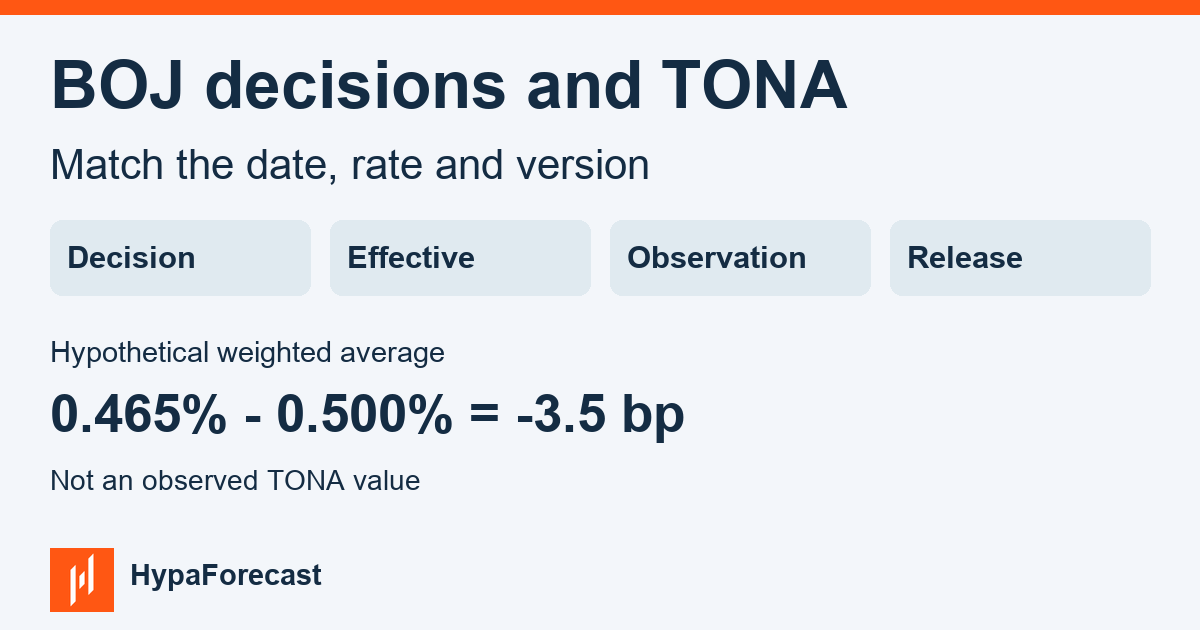
Read a BOJ policy decision alongside TONA: match effective and observation dates, choose the weighted-average rate, and check provisional or final results.
Read guide
See how Hokkaido and Yokohama use gross and net time in 2026, why two runners can swap order, and which rule to check for your marathon ranking.
Read guide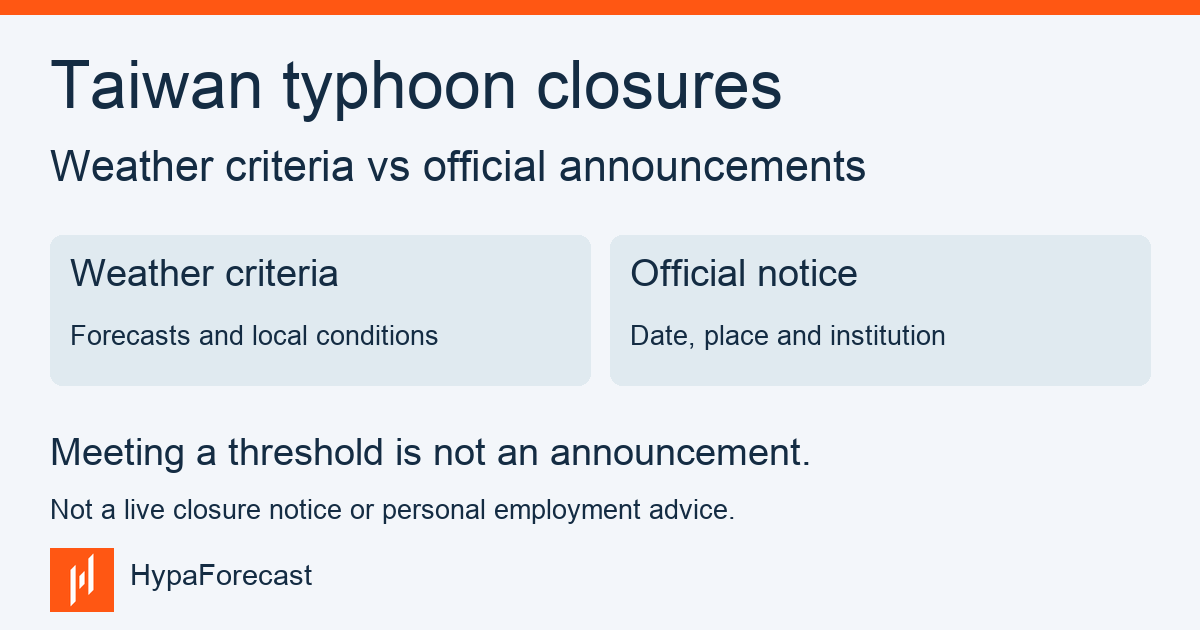
Understand Taiwan's typhoon closure criteria, who can announce a suspension, and how to read official notices for the relevant area and institution.
Read guide
Compare Korea’s overnight KOFR with the 91-day CD benchmark. Read the fixing dates and the FSC’s March 2026 plan without confusing designation with publication.
Read guide
Compare BI-Rate with daily IndONIA: understand the overnight rupiah trades, reporting clock, seven-day policy basis and dates behind each figure.
Read guide
What follows a tied Super Over? A guide to the Men's T20 World Cup 2026 repeat rules, player restrictions and time allowances, with a dated match example.
Read guide
Read Rakuten’s cash-stock examples to distinguish the same funds from separate funds, and see why buying power alone may not permit a repurchase.
Read guide
Separate purchase payment from later sale receipt in Korea Investment’s FAQ, and understand its full-cash requirement and cash repurchase restriction.
Read guide
Understand SSI’s automatic buying power, one-off sale-proceeds advances and service cancellation without confusing them with receipt of the sale proceeds.
Read guide
Compare SAIBOR and SAMA repo references in the 2021 and 2025 sources. Check the label, tenor and date; this is not a live-rate or facility guide.
Read guide
Turn a market idea into a testable question. Use a filled proposal worksheet and edge-case tests to clarify sources, deadlines, corrections and missing evidence.
Read guide
Check whether a Kalshi withdrawal request exists, compare its status with recipient records, and list the missing facts before contacting official support.
Read guide
Read RBI’s repo, SDF and fixed reverse repo rates with a dated worksheet. Match decisions to listings and check basis-point gaps before comparing.
Read guide
Sale credit, withdrawal eligibility and bank receipt are different. Follow a T+1 holiday example and two record-based checks for the unresolved stage.
Read guideFind out how stoppage time differs from extra time, what 90+5 means, why the added-time board shows a minimum, and when a shoot-out follows.
Read guideLearn how median and mean household income are calculated, why high incomes can pull up the average, and which measure answers each question.
Read guide